

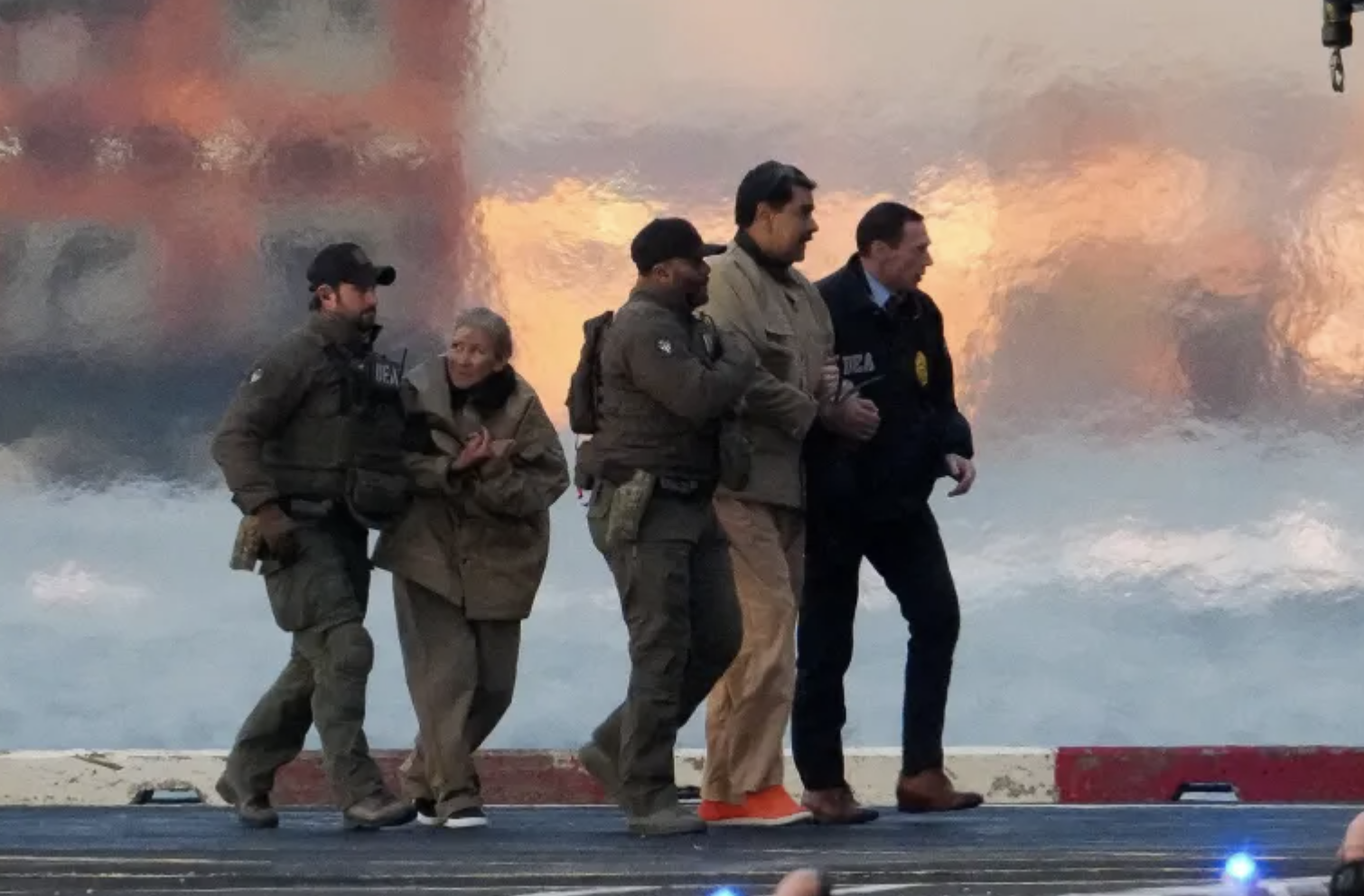
Former Venezuelan president Nicolás Maduro is set to appear for his second court hearing in the United States following his forceful capture by US forces on January 3. At his first appearance, he described himself not as a defendant but as a “prisoner of war” and a kidnapped head of state. Significant uncertainty remains ahead of the hearing regarding the course of the proceedings, the defence strategy and the strength of the prosecution’s evidence.
The criminal prosecution of former or sitting heads of state by the United States is rare. Comparable cases include former Panamanian leader Manuel Noriega and former Honduran president Juan Orlando Hernández. Legal experts describe the current situation as largely uncharted territory. The defence is expected to seek dismissal of the case at an early stage, arguing, among other points, that Maduro was the legitimate head of state at the time of his capture and that his transfer to the US violated international law.
The arrest took place during a large-scale US military operation involving around 150 aircraft, which disabled Venezuela’s air defences and caused a major power outage in the capital, Caracas. Special forces units such as the Delta Force and FBI personnel were involved. According to Venezuela, at least 75 people were killed in the operation. The US government described the mission as a law enforcement action, although it was accompanied by political calls for regime change and economic pressure. President Donald Trump later stated that he intended to “run” Venezuela.
Legally, the defence may argue that continuing the case would make the court complicit in a violation of international law. Questions have also been raised about whether the use of the military for such an arrest was permissible. The doctrine of head-of-state immunity may also play a role, as the US has disputed Maduro’s legitimacy for years.
The charges focus on allegations of “narco-terrorism”, drug trafficking and weapons offences. Maduro is accused of maintaining ties to groups such as the FARC and the ELN and of using state resources to support drug trafficking operations. Notably, key elements of an earlier indictment — particularly claims that he led the so-called “Cartel de los Soles” — have been significantly scaled back. The network is now described more as a loose patronage system than a coordinated organisation.
The prosecution’s case appears to rely heavily on testimony from informants, including former Venezuelan general Hugo Carvajal, who has already pleaded guilty in the US. Experts warn this could weaken the credibility of the case, as cooperating witnesses may have incentives to testify in exchange for leniency. At the same time, the political nature of the case could make it difficult to select an impartial jury.
A dispute over legal funding has also delayed proceedings. Maduro’s lawyers accuse the US government of blocking access to Venezuelan state funds, thereby infringing his right to counsel of choice. Prosecutors argue that Maduro remains free to use private funds.
Even if the case is dismissed or results in acquittal, Maduro’s future remains uncertain. As a non-US citizen, he could still face immigration detention. Argentina has also requested his extradition on charges of crimes against humanity related to a crackdown on protesters and political opponents.
Experts expect a lengthy legal process. Months of preliminary legal challenges are likely before evidence is formally presented, with a full trial not expected to begin for at least several years.
Source: Al Jazeera