

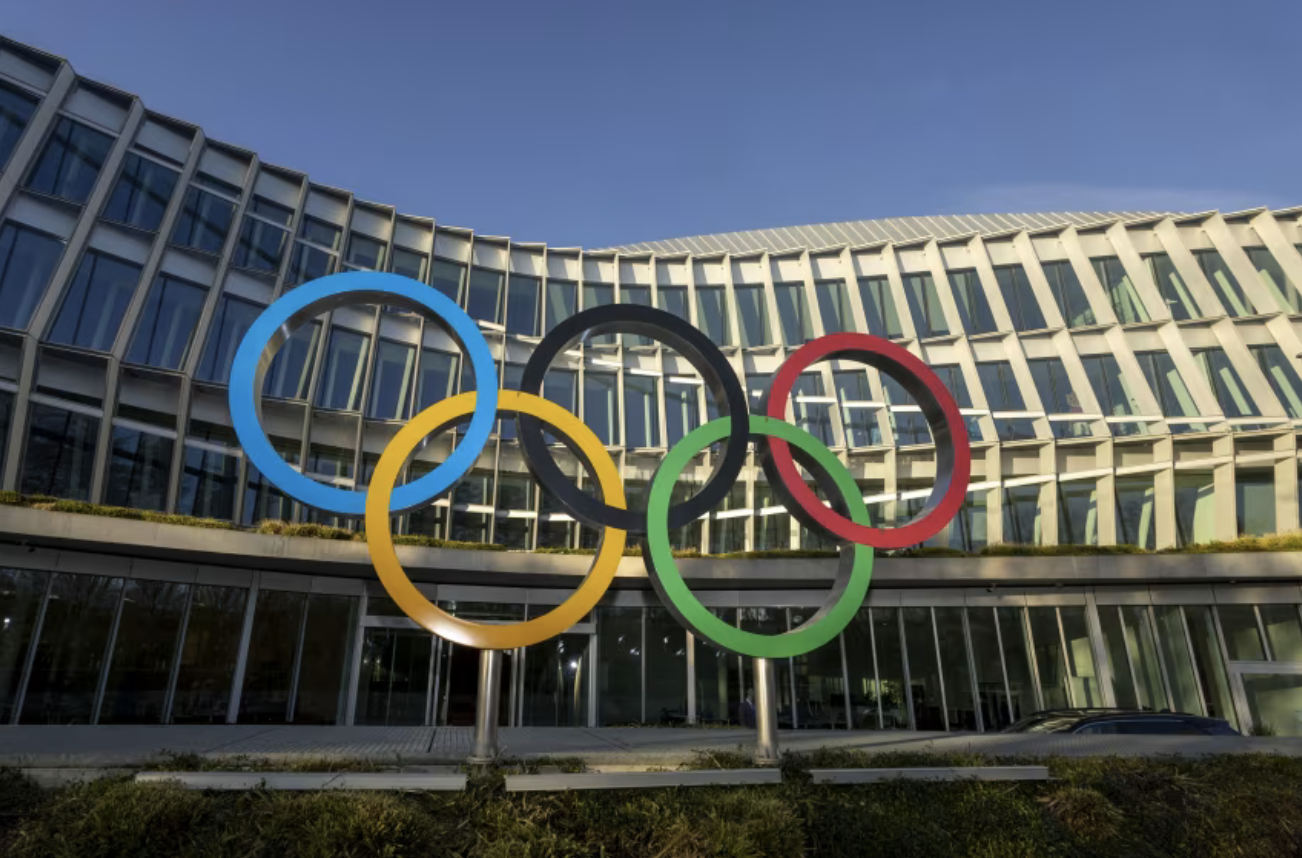
The International Olympic Committee (IOC) will exclude transgender women from women’s events at the Olympic Games in the future. The decision is based on a new eligibility policy stating that only biologically female athletes may compete in the women’s category. Eligibility will be determined by a mandatory genetic test to be conducted once in an athlete’s career. The measure is set to be implemented for the first time at the 2028 Olympic Games in Los Angeles and applies to all IOC-organized competitions, but not retroactively and not to grassroots sports.
The IOC justifies the decision as a means of protecting fairness, safety, and integrity in women’s sports. President Kirsty Coventry emphasized that even the smallest performance differences are decisive at the elite level and that biological males should therefore not compete in the women’s category. The new policy replaces the previous approach in which international sports federations established their own rules. Prior to the 2024 Paris Games, several sports, including athletics, swimming, and cycling, had already excluded transgender women who had undergone male puberty.
The regulation also affects athletes with differences in sex development (DSD), including South African runner Caster Semenya. She had challenged existing regulations at the European Court of Human Rights but did not succeed in having them overturned. The IOC cites scientific findings indicating that male development driven by testosterone leads to lasting physical advantages, particularly in disciplines requiring strength, endurance, or explosiveness.
The mandatory genetic test examines, among other factors, the SRY gene, which is typically found on the Y chromosome and initiates male sex development. Samples may be taken via saliva, cheek swab, or blood. According to the IOC, this method is currently the most accurate and least invasive available. Human rights organizations and activists are expected to criticize the planned testing as discriminatory.
The debate over gender categories had already been a central issue during the IOC presidential election and at the Olympic Games in Paris, particularly in boxing. Taiwanese boxer Lin Yu-ting recently passed a genetic test and remains eligible to compete, while Algerian Olympic champion Imane Khelif has announced plans to undergo testing in order to compete at the 2028 Games.
The IOC estimates the average performance advantage of biological males over females at 10 to 12 percent in running and swimming events, at least 20 percent in throwing and jumping disciplines, and over 100 percent in highly explosive sports such as boxing.
Source: CNN Sports