

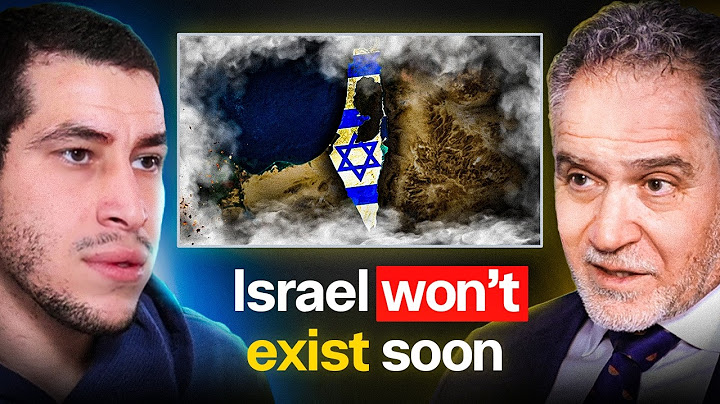
Miko Peled, grandson of a signatory of Israel’s Declaration of Independence and son of a general in the Six-Day War, describes a personal shift toward supporting Palestinian causes. The turning point is a family tragedy in 1997, when his niece is killed in a suicide bombing in Jerusalem. This experience leads him to question the root causes of the violence. Instead of attributing blame broadly to Palestinians, he directs his criticism at political structures. His first encounters with Palestinians take place in the United States; later, he travels regularly to Palestinian areas. He describes Jerusalem and the wider region as highly segregated, with Israelis and Palestinians living in separate realities. According to his account, his original view of Israel’s founding changes fundamentally.
Peled attributes the attitudes of many Israelis toward Palestinians to an education system that either renders them invisible or portrays them as a threat. Fear and security concerns shape perceptions more strongly than hatred. This narrative is reinforced and reproduced across society. He compares the situation to historical examples of ideological conditioning and highlights the absence of broad societal resistance. Within his own family, there were more moderate positions, such as his father’s support for a two-state solution, but these were marginalized.
As a political perspective, Peled considers a one-state solution to be the only realistic option, based on equal rights for all inhabitants. He views the two-state solution as no longer viable due to territorial and political developments that have undermined it. In Palestinian and activist circles, the idea of a single state is gaining traction, while it remains largely unaddressed in political decision-making arenas.
Peled describes current violence as a continuation of historical developments since Israel’s founding. The events between 1947 and 1949 led to the displacement of large parts of the Palestinian population and shaped the identity of the state. He interprets the current escalation as part of this trajectory and sees broad support within Israeli society for military actions.
He is critical of the role of international actors, arguing that the United States and European countries contribute to the continuation of the conflict through political and military support. Arab states, in his view, face a difficult position, as their governments depend on Western backing while also needing to maintain internal stability. He interprets geopolitical developments, including tensions with Iran, as expressions of global power politics rather than rational security considerations.
Peled places particular emphasis on religious and cultural sites such as the Al-Aqsa Mosque. He warns of potential destruction or transformation of such sites and sees a pattern in which Palestinian access is restricted before changes are implemented. He frames this as part of a long-term strategic approach.
As a course of action, he calls for increased political pressure on Western governments. Measures such as sanctions, diplomatic isolation, and economic boycotts are, in his view, necessary to bring about change. At the same time, he criticizes the lack of coordination within the international solidarity movement and calls for clearer strategic direction. Organizations such as the “Palestine House of Freedom,” which he founded, are intended to serve as platforms for education, networking, and political mobilization.
Within Western societies, Peled observes initial signs of change, particularly among younger generations and segments of Jewish communities that are becoming more critical. However, political impact remains limited so far. In the long term, he expects a shift in public discourse. He concludes by calling for active engagement and a sense of responsibility in pursuing political change.