

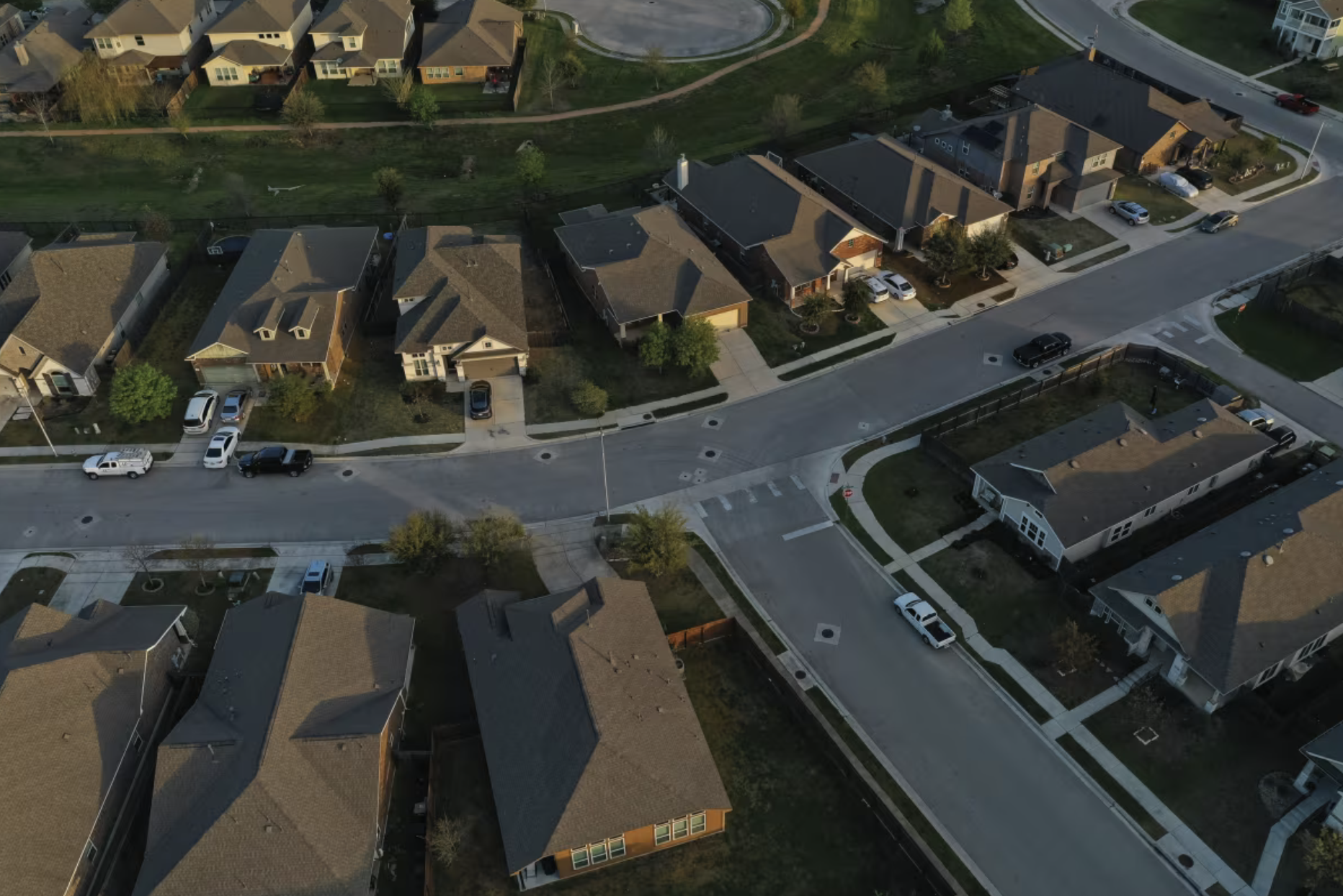
The development of the US housing market in 2026 is being weighed down by economic uncertainty and rising mortgage rates. After years of weak sales, economists had expected lower rates and a greater supply of homes to revive the market following a 30-year low in transactions the previous year. Instead, the average rate for 30-year fixed mortgages rose to 6.38%, reaching its highest level in more than six months after four consecutive weekly increases. This marks the largest weekly increase since April 2025.
The rise in rates is driven in part by geopolitical tensions following joint military actions by the United States and Israel against Iran, as well as a weakening labor market. These factors are making potential buyers more cautious. At the same time, mortgage rates track the yield on 10-year US Treasury bonds, which recently climbed to as high as 4.44%. Inflation concerns in financial markets are a key factor behind this trend. For buyers, this has tangible financial consequences: for a home priced at $450,000 with a 20% down payment, the additional cost compared to a month earlier amounts to about $1,120 per year, or more than $33,000 over the life of the loan.
At the beginning of the year, housing activity was sluggish, partly due to winter weather conditions. The market typically gains momentum in the spring as more properties are listed and buyers become more active. At the end of February, there were brief signs of improvement when mortgage rates fell below 6% for the first time in more than three years. However, this trend quickly reversed following the military escalation.
Despite current uncertainties, market conditions are considered more favorable for buyers compared to previous years. Home prices are rising more slowly than inflation, while wages continue to increase. In addition, mortgage rates remain below last year’s level, when they exceeded 6.6%. At the same time, supply has increased significantly: there are currently about 630,000 more sellers than buyers, representing the largest gap in at least ten years.
The increased selection strengthens buyers’ negotiating position, as they can more easily turn to alternative offers. At the same time, demand shows greater restraint. Mortgage applications recently fell by 10.5% within a single week. Homes are receiving fewer offers, and bidding wars are less common than in previous years.
The number of failed home purchases is also rising. In February, more than 42,000 contracts were canceled, accounting for about 14% of all agreements finalized that month and representing the highest share for any February since data collection began in 2017
Source: CNN Business