

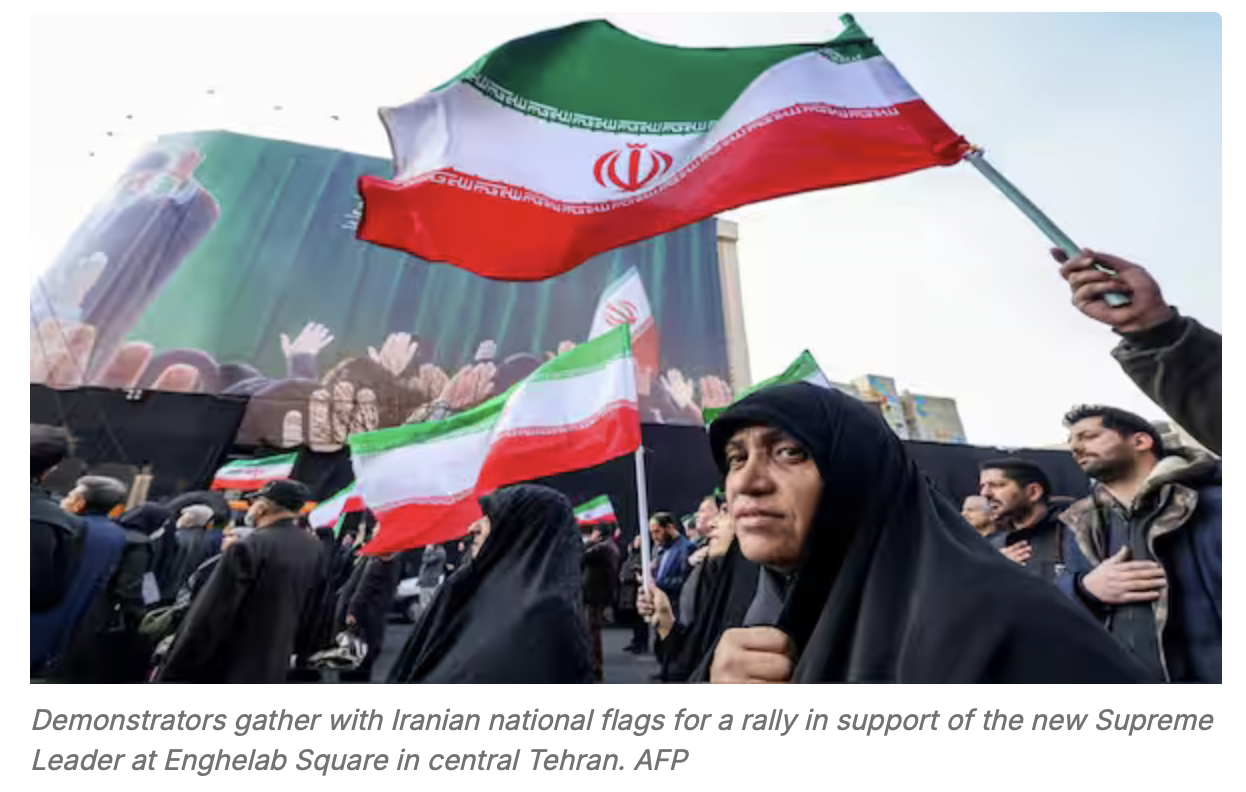
After intense fighting in the conflict involving the United States, Israel, and Iran, US President Donald Trump announced a five-day pause in attacks and spoke of “productive” talks with Iranian leadership. At the same time, uncertainty persists over who is actually making decisions in Tehran. Following the death of former Supreme Leader Ali Khamenei, his son Mojtaba Khamenei formally assumed power but has not appeared in public since his appointment. Reports about his health and whereabouts have raised doubts about his ability to govern, while intelligence agencies are seeking evidence of his role.
Several figures play key roles within Iran’s power structure. Parliament Speaker Mohammad Bagher Ghalibaf is seen as an influential insider with close ties to the Revolutionary Guards but has denied reports of negotiations with the United States. Foreign Minister Abbas Araghchi is viewed as a potential negotiator due to his diplomatic experience, yet he has taken a confrontational public stance and may have limited authority to make decisions. President Masoud Pezeshkian has adopted a more moderate tone but has remained largely in the background during the conflict and is calling for security guarantees as part of any potential agreement.
Other centers of power also shape the political landscape, including cleric Ali-Asghar Hejazi, a key coordinator within the Supreme Leader’s circle, and military figures such as Ahmad Vahidi of the Revolutionary Guards. The latter maintain a hardline stance toward the United States and are also subject to sanctions. The range of actors and conflicting signals make it difficult to determine who could serve as a reliable counterpart in negotiations to end the war.