

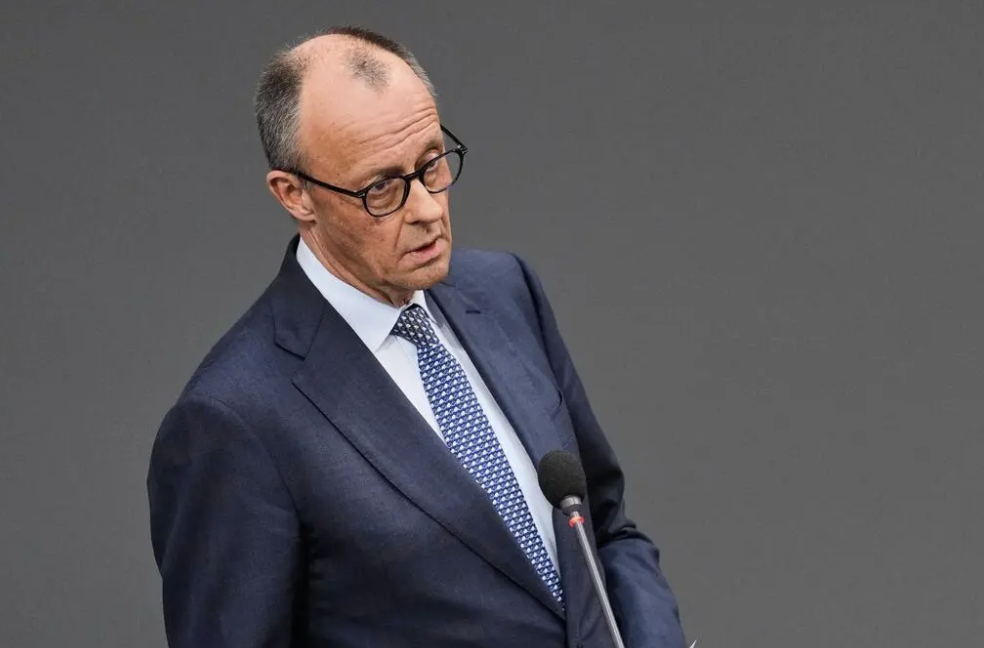
In the Bundestag, the debate over violence in Germany and in schools has escalated. Chancellor Friedrich Merz said in a session that violence in society was “exploding,” both online and offline, and called for joint action, particularly with regard to violence against women. At the same time, Merz said the causes also needed to be addressed and stated that a “considerable proportion” of the violence was being brought into Germany by immigrant groups; he received applause from members of the CDU/CSU and the AfD.
The remarks drew sharp criticism from the Social Democrats (SPD) and the Left Party. SPD parliamentary group leader Matthias Miersch argued that violence against women should be viewed as a broader societal problem and should not be reduced to a single population group. He said violence had “no origin and no religion,” adding that the focus had to be on protecting victims regardless of the perpetrators’ background.
Several figures are cited in connection with violence and crime: foreigners are said to commit 65 percent of sexual offenses on German trains and at train stations, despite making up about 15 percent of the population; German citizens with a migration background are not included in that 65 percent. In North Rhine-Westphalia, foreigners are reported to account for about half of all gang rapes; an analysis of suspects’ first names is also said to indicate that at least half of German suspects clearly had names of foreign background, meaning 75 percent of all gang rapes were committed by foreigners or people with a foreign background. According to government data, 63,977 women were victims of sexual violence in 2024; foreigners made up 35 percent of perpetrators, based on a published response to a Bundestag inquiry from the AfD.
Further government data are cited on crimes committed since 2015 by Syrian suspects against Germans: 135,000 cases, averaging “one every 39 minutes.” Additional totals are listed for other countries of origin: 82,960 linked to Afghanistan, 69,946 to Iraq, 39,918 to Morocco, and 32,383 to Algeria. Altogether, more than 460,000 crimes are said to have been recorded over a ten-year period involving suspects from the ten main countries of origin: Syria, Afghanistan, Iraq, Iran, Morocco, Algeria, Nigeria, Pakistan, Somalia, and Eritrea.
The debate also extended to education policy. Saskia Esken, chair of parliament’s Education and Family Committee, said the number of violent crimes recorded by police in schools had risen significantly in all federal states, but rejected the idea that migration was the main driver. She said violence emerged where children learned neither at home nor at school other ways to regulate feelings and resolve conflicts, describing schools as a heterogeneous, quasi-forced community in need of social workers and psychologists to address issues such as poverty and lack of prospects. As a counterpoint, a government response to a query by AfD MP Martin Hess is cited as saying that 40 percent of suspects in violent crimes at German schools are foreigners; the figures given are 4,254 foreign suspects and 7,309 suspects with German citizenship. Of 11,558 suspects in total, 1,236 had Syrian passports; these figures were provided to the newspaper Welt. It is also noted that a substantial number of suspects with a migration background are counted as German citizens in the statistics, producing an incomplete picture of the role of earlier migrant generations in crime.
A separate incident also drew attention: Left Party Bundestag member Cansin Köktürk posted a photo on Instagram showing her middle finger directed at Merz, accused him of “hysterical, constant whining” about migrants, and wrote that he instrumentalized individual cases while using rhetoric she described as aggressive and hurtful toward those affected.
Source: ZeroHedge