

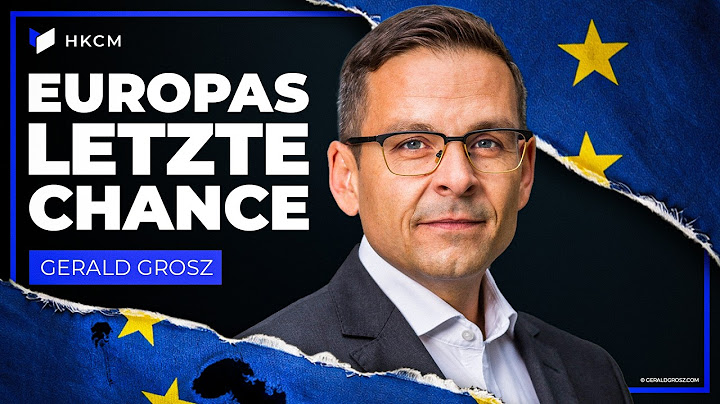
In an interview between Philip Hopf and Gerald Grosz, European migration policy of recent years is portrayed as a profound crisis. Grosz puts the number of affected people at around 9.4 million, mainly in Germany, Austria, and France, and assesses large parts of the migration as illegal and difficult to integrate. From his perspective, this has led to significant strain on public systems such as education, the judiciary, and social services. Rising population numbers combined with declining capacities are said to have caused overload, while a high proportion of people without citizenship is noted in welfare systems and prisons. Overall, a link is drawn between migration, societal insecurity, and increasing political polarization.
As a counterproposal, Grosz presents a concept of “remigration,” which includes not only deportations but also broader socio-political measures. Those affected would primarily be individuals without legal residency status, criminals, and people not contributing economically. For Germany and Austria, returns are projected in the millions or several hundred thousand respectively. At the same time, he calls for changes to international regulations and stricter border management to limit new immigration. Implementation could lead to short-term social conflict and visible hardship but is framed as necessary to restore order and security.
In the further discussion, Hopf and Grosz address the tense geopolitical situation, including conflicts in the Middle East, economic tensions, and potential new refugee movements. At the same time, political shifts in several European countries are highlighted as signs of a possible change in direction. Despite an overall pessimistic assessment of the current situation, the capacity of societies to overcome crises and adapt is emphasized, along with expectations of political change in Europe.