

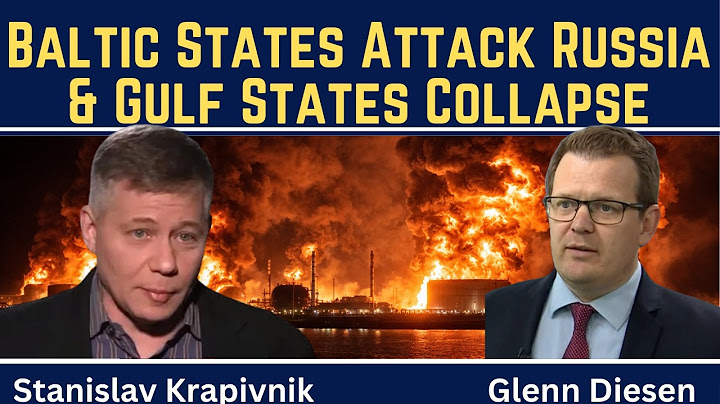
A drone attack on a key Russian Baltic Sea port has, according to the assessment of a former U.S. Army officer, triggered significant geopolitical tensions. Dozens of drones were reportedly deployed over long distances, with indications suggesting they may have either flown through NATO airspace or even been launched from Baltic states. Some drones are said to have struck targets in Estonia and Latvia. This raises questions about the role of the countries involved, as the uninterrupted passage of large drone swarms is considered unlikely. At the same time, an increasing escalation is observed, as attacks on Russian infrastructure and economic measures such as the seizure of energy exports are seen as part of a strategy to pressure Russia. Observers view this as crossing previously informal boundaries in a proxy conflict.
At the same time, the global situation is reportedly worsening due to the interconnection of multiple conflicts, particularly in the Middle East. An expansion of hostilities could have far-reaching consequences for energy supply and the global economy. Damage to production facilities and refineries—especially in key gas and oil-producing regions—would lead to long-term output losses, as repairing complex infrastructure can take months or even years. In addition, shortages of steel, specialized components, and skilled labor are expected. The decline in natural gas supply is seen as particularly critical, having already reduced global availability. This is especially affecting Europe, where energy-intensive industries such as steel and fertilizer production are severely constrained. At the same time, rising diesel prices and a lack of fertilizers are hampering agricultural production, potentially leading to higher food prices and supply issues in the medium term.
Furthermore, increasing military alignment between Russia, Iran, and potentially China is described. Russia is said to already be supporting Iran both technically and militarily, while further escalation—such as the deployment of Western ground troops—is considered highly risky. Due to Iran’s geography and military capabilities, such an operation is expected to result in heavy losses. At the same time, attacks on strategic chokepoints such as the Strait of Hormuz could severely disrupt global trade.