

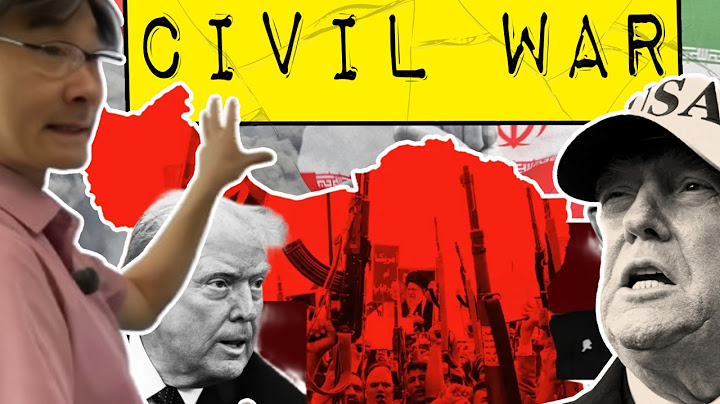
Prof. Jiang Xueqin outlines a scenario for the next two to four years based on the assumption of a convergence of religiously influenced eschatological beliefs, using this to derive geopolitical developments. According to this view, a U.S. military intervention involving ground troops would lead to the introduction of conscription, potentially triggering domestic tensions and protests. At the same time, conflicts in the Middle East would weaken the economies of the Gulf states, while countries such as Turkey and Saudi Arabia would be drawn into the war and suffer significant losses. Iran is expected to gain power, possibly playing a central role in future conflicts in coordination with Russia.
In this scenario, Israel would expand its territory and emerge as a center of political and technological power, with major technology companies relocating their activities there. At the same time, a Russian victory in the war in Ukraine and a destabilization of Europe and NATO are anticipated. These developments are presented as stemming from overlapping elements of different religious interpretations, which are used to explain current geopolitical dynamics.
As an alternative interpretation, a more power-political perspective is discussed, emphasizing miscalculations by U.S. leadership in dealing with Iran. However, it is argued that a U.S. withdrawal from the region is unlikely due to the severe economic consequences it would entail. If Iran were to gain control over key trade routes, it could experience significant economic growth and rise to become the dominant power in the Middle East, while the United States would face economic losses.