

Signs of rapid economic and social decline in the United Kingdom have reportedly become more frequent following a trip to northern England, a downturn that, in the speakers’ view, is barely reflected in official statistics. In formerly busy town centers, many high streets are said to be empty, urban decay is widespread, and hotels and similar businesses have either closed or are sharply downsizing. Strains are also visible in London, but outside the capital the problems appear far more pronounced, while the government and political establishment in London are portrayed as neither prepared nor taking clear countermeasures.
The energy supply is described as particularly risky because the UK is said to be highly exposed to energy price spikes, with prices already among the highest in Europe and roughly twice those in France. At the same time, the country reportedly has only a few days’ worth of natural-gas reserves and is increasingly buying gas on the spot market; natural gas is also the main heating fuel for households. Electricity, energy, and food prices are expected to rise sharply, also due to tightening fertilizer supplies: shipments from Belarus and Russia are not being sourced because of sanctions, and supplies from the Persian Gulf have declined. British farming is described as already in crisis, while faster deindustrialization, factory closures, and worsening public finances—with a large deficit and high debt—are seen as looming risks.
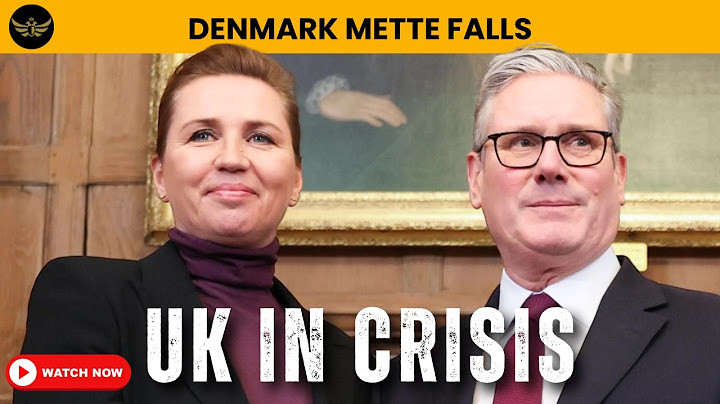
Politically, the situation is portrayed as worsening because leading figures continue to emphasize threat scenarios involving Russia, while many citizens are mainly worried about higher bills, job losses, and supply disruptions. On a radio program, callers were reportedly scathing after remarks by former minister Tobias Elwood, who warned of Russian attacks and the cutting of numerous undersea cables. In Denmark, which has historically close ties with the UK, Prime Minister Mette Frederiksen is depicted as pursuing especially hardline anti-Russia rhetoric and unwavering support for Ukraine amid growing economic pressures. In the election, the Social Democrats reportedly suffered their worst defeat in a century and Frederiksen was voted out, though the discussion suggested she could still return to office or move into top international roles such as NATO or EU institutions.