

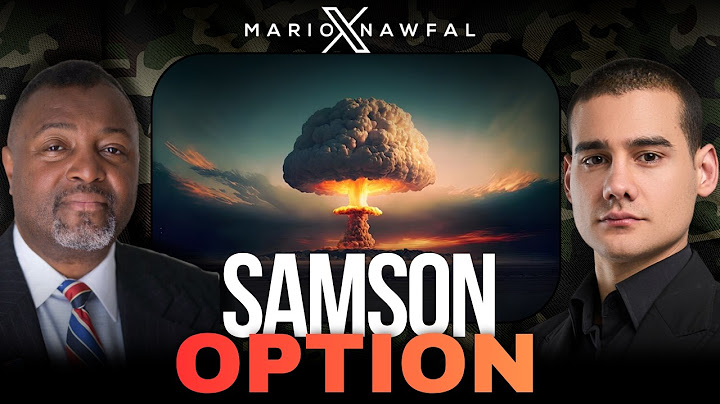
In connection with the conflict in the Persian Gulf, a possible military scenario is being discussed in which the United States could deploy a small tactical nuclear weapon against Iranian missile facilities in order to destroy them precisely while minimizing radioactive fallout. Such a move would be widely regarded internationally as a sign of massive escalation. At the same time, a political off-ramp is considered conceivable in which the US government initiates a withdrawal, leaves the protection of the Strait of Hormuz shipping route to other actors, and presents the outcome domestically as a success.
China could play a central role by intervening militarily and diplomatically, guaranteeing the security of trade routes and acting as a mediator between Iran and the international community. In such a scenario, China would function as a security guarantor and push Iran toward cooperation, while Western forces would be pushed out of the region. At the same time, Iran’s demands have recently shifted and now focus primarily on security guarantees, the lifting of sanctions, and financial compensation, with economic cooperation seen as an indirect substitute for reparations.
The economic consequences of the conflict are already visible in global supply chains, particularly in fertilizers, whose availability and prices are under significant pressure. Export restrictions by China and potential production disruptions threaten agricultural yields, especially in the United States and Africa, where famine risks are increasing. In the Gulf states, discussions are also underway about establishing a more independent defense structure, while existing US military bases are increasingly being questioned because they have failed to provide effective deterrence against Iran.