

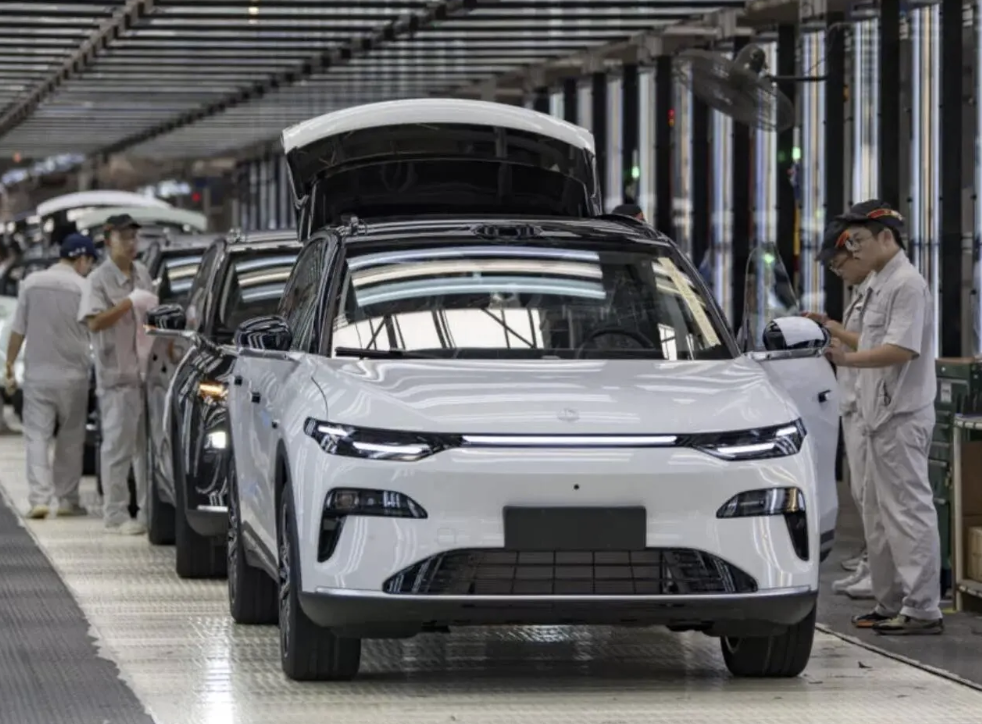
The military conflict between the United States and Israel on one side and Iran on the other is causing a sharp increase in oil prices and, according to analysts, is accelerating the global transition to electric vehicles. The price of crude oil has surpassed $100 per barrel, driven by concerns over potential disruptions to energy supplies, particularly in the strategically important Persian Gulf and the Strait of Hormuz. US President Donald Trump escalated tensions by threatening to strike Iranian energy infrastructure if shipping through the strait is not restored within 48 hours.
Rising fuel prices are significantly influencing consumer behavior. Experts assume that electric vehicles are becoming more economically attractive due to the sharp increase in gasoline and diesel costs. In countries with access to low-cost Chinese electric cars, the price advantage over internal combustion engine vehicles is expected to widen further. In particular, in price-sensitive markets across Asia, ongoing volatility in energy markets is expected to further boost demand for electric vehicles.
The global trend toward electric mobility has already intensified significantly in recent years. There are now 39 countries in which electric vehicles account for more than ten percent of new car sales, compared to just four in 2019. Notably, adoption is progressing faster in some emerging economies than in wealthier industrialized nations.
China is benefiting in particular from this development. In 2025, the country became the world’s largest car seller, overtaking Japan. Chinese manufacturers such as BYD and Geely have surpassed Japanese competitors like Nissan and Honda and now represent a growing share among the world’s leading automakers.
A key factor behind this rise is exports. China exported 8.32 million vehicles last year, representing an increase of 30 percent. Of these, 2.32 million units were electric vehicles, up 38 percent. The most important markets are Europe, followed by Southeast Asia, Latin America, and the Middle East.
At the same time, rising energy costs may pose short-term challenges for electric vehicle production, as manufacturing is energy-intensive. Countries with a high dependence on energy imports are particularly vulnerable to this development, including Thailand, which relies heavily on supplies from the Gulf region. China, however, has more integrated supply chains and more flexible energy sources, increasing the resilience of its domestic electric vehicle industry and enabling further growth under uncertain global conditions.
Source: Zerohedge