

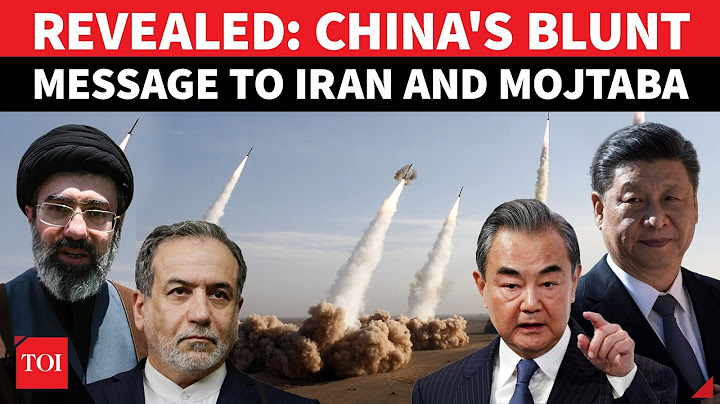
In the escalating conflict between the United States and Iran, China is emphasizing diplomatic restraint and calling for talks instead of military confrontation. Foreign Minister Wang Yi urged his Iranian counterpart in a phone call to pursue dialogue. The situation is marked by a stalemate in which neither side has gained a decisive advantage, yet both have demonstrated their capacity to escalate: the United States through strikes deep within Iran’s sphere of influence, and Iran through disruptions to global trade and energy flows. For China, as the world’s largest oil importer, the security of the Strait of Hormuz is of critical importance, as any prolonged disruption there would have significant economic consequences. Beijing’s position signals support for Iran, but also clear limits when it comes to further destabilization of the global order.
Russia is also pursuing a diplomatic approach, while clearly warning against an expansion of the conflict. Kremlin spokesman Dmitry Peskov stated that any spillover of hostilities into the Caspian Sea would be viewed extremely negatively. This follows reports of alleged Israeli strikes on Iranian naval assets in this strategically sensitive and resource-rich region. Moscow sees this as a threat to regional stability and its own geopolitical interests. At the same time, Russia strongly warns against attacks on nuclear facilities such as the Bushehr nuclear power plant, which is under international supervision, as such actions could have potentially irreversible consequences. The Russian leadership is therefore calling for an immediate shift toward political negotiations.
At the same time, there are conflicting signals from Washington and Tehran. U.S. President Donald Trump spoke of progress in talks with Iran and possible agreements, while Tehran is simultaneously deepening its cooperation with Moscow. In a high-level exchange between Foreign Ministers Abbas Araghchi and Sergei Lavrov, the strategic partnership between the two countries was reaffirmed. Observers see this as a dangerous dynamic in which the regional conflict is increasingly becoming internationalized. In particular, the reported strikes in the Caspian Sea could mark a new phase, expanding the geographical scope of the conflict and drawing additional major powers into involvement.